All of the energy in the universe moves in waves. Higher, then lower. Up and down.
So it seems to go in history. Movements and empires rise and fall. In our country, parties gain ascendancy and then a new wave brings in the other.
Life goes like this too. We come into the world like a wave, and as we grow, we build strength and energy and force. And then, over time, our strength diminishes, our energy recedes, and one day we relinquish the life-force that brought us into being.
But then we discover a force in the universe that is unbreakable, transcendent, and eternal. Torah and tradition guide us to cultivate wisdom, understanding, and awareness, to build capacities for loving-kindness, strength, and balance, and to nurture perseverance, gratitude, and a pursuit of peace. We learn to harness that holy force, not simply to enrich our individual lives, but so we can discover how to heal our broken world.
In Parashat Toldot, Isaac seeks refuge from famine in the land of the Philistines. There he plants crops which, amazingly, produce a harvest beyond imagination.
What allows the crops to grow? Water – the most precious resource in that dry, arid land. But where was that essential water hiding? Hidden, deep underground, tapped only by digging wells.
Isaac’s blessings grow and grow. And the Philistines, jealous and afraid of his rising power and wealth, seek to restrain him by stopping up the wells his father Abraham had dug.
Wells in our tradition represent so much more than water. A well reveals what is hidden – the source of life one cannot see unless one excavates that which covers it.
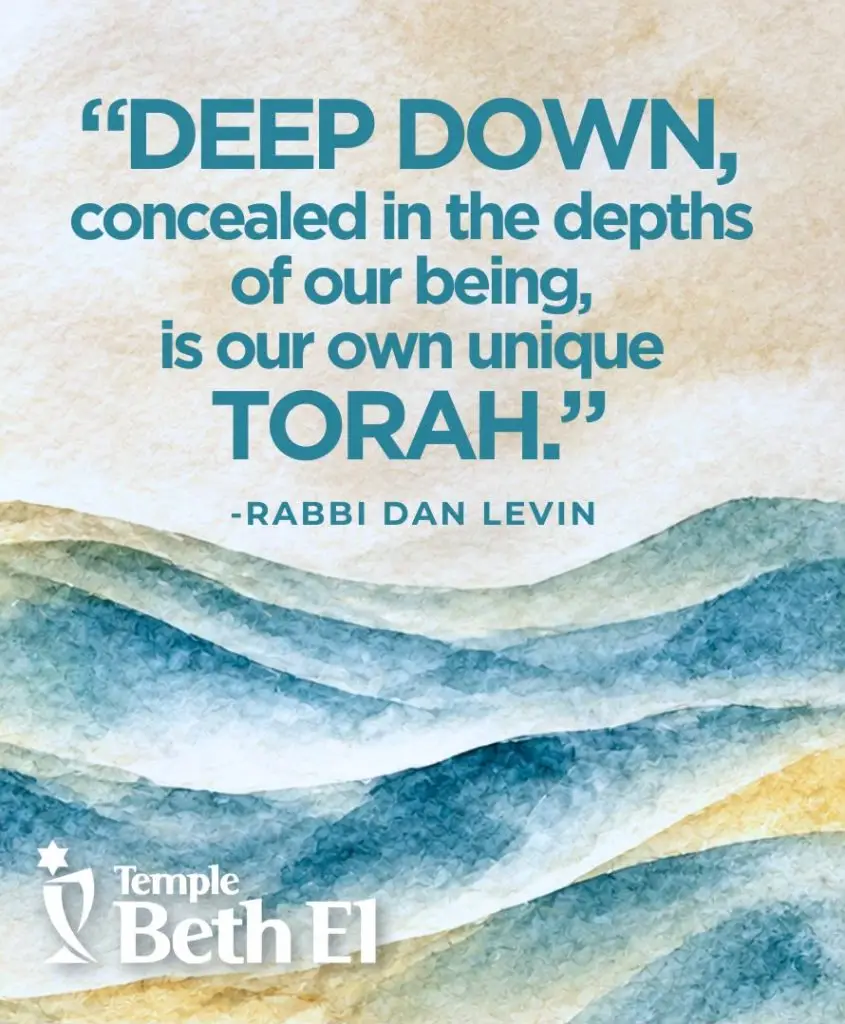
Torah is often called Mayim Chayim – the waters of life. Water, we know, is the source of all life. Most of what we are, beneath the surface, is not just water, but our own inner divinity, our essential holiness. Deep down, concealed in the depths of our being, is our own unique Torah, the wellspring of our life-force.
That hidden, holy core is often covered by an outer crust of fear and insecurity, jealousy and resentment. Those vices produce an even harder shell of arrogance, ignorance, chauvinism, and conceit. We walk through life oblivious to all the goodness that lies beneath the surface, if we would just take the time to dig.
Confronting the holy can be threatening. When the truth of who we are supposed to be is revealed to us, and we see how wide is the gap between that ideal and who we are today, we can feel a deep sense of fear and shame.
And this is what happened with the Philistines. Abraham had uncovered for the world a vision of holiness, an ideal for what humankind could strive to be. But that vision terrified the Philistines.
So, in their jealousy and fear, they stopped up the wells that Abraham had dug. They shut themselves off from the truths he had uncovered. They thought if they closed off the fonts of wisdom, understanding, and love, then their hatred would protect them from the power of those holy ideals.
But Isaac knew that our life depends on tapping into those wellsprings of holiness. And so, he digs. He digs out the wells his father had dug before him. And he digs new wells that bring him even greater prosperity and peace.
In the wake of recent elections, both here and in Israel, we see those perennial waves. Those who held sway saw their influence recede. Others saw their power swell.
The question is: what will we do? Will those who now find themselves in power press their advantage and seek to quash the other side? Will those who have lost their power, in a fury of hatred and fear and resentment, work to undermine those who have risen, and close off the wells that could nurture us all?
Or perhaps we can put the common good ahead of our personal privilege, setting aside both the pride of victory and the humiliation of defeat, and seek to dig new wells together, that can bring us the shared prosperity and peace our world so desperately needs.
Shabbat Shalom,

Rabbi Dan Levin, Templer Family Senior Rabbinic Chair
Temple Beth El of Boca Raton