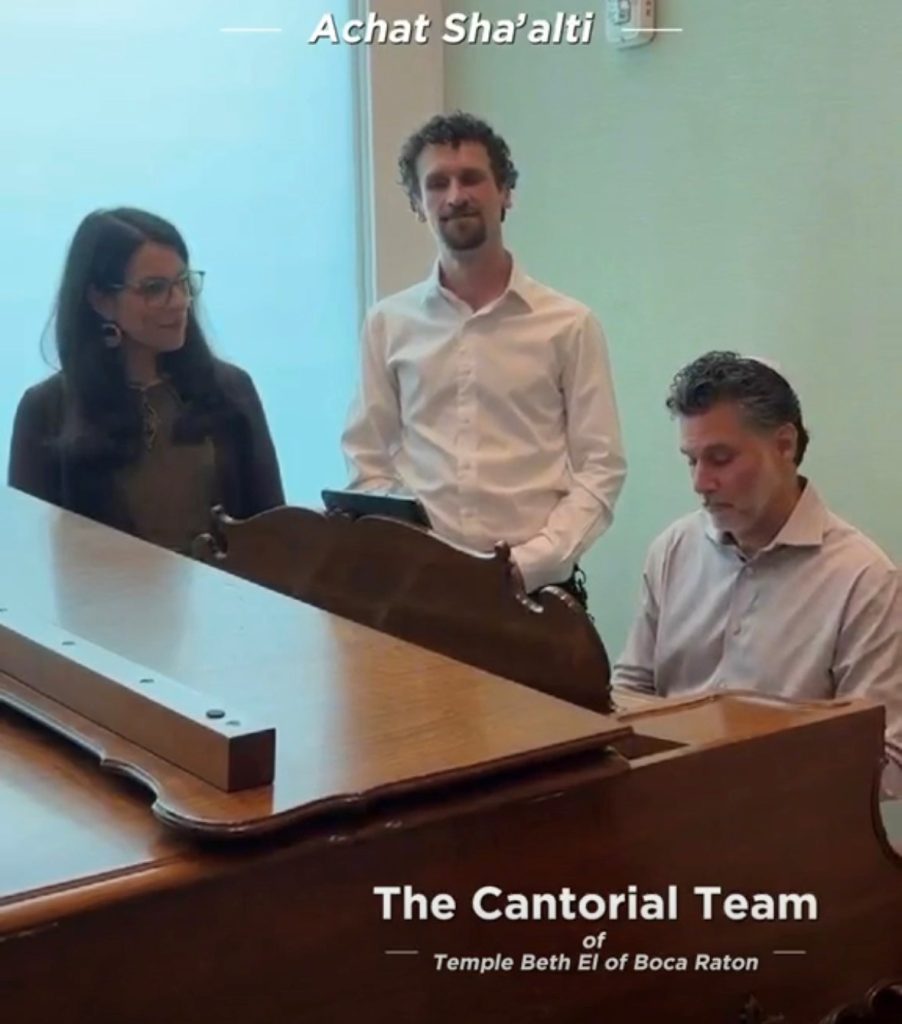
Click Here to View a Video of Achat Sha’Alti with our Cantorial Team
During the month of Elul, our tradition teaches that we should read Psalm 27 twice daily as we lead up to Rosh HaShanah. A popular verse from this psalm, and one you can listen to our cantors singing in this message as well, is verse 4:
“One thing I ask of the LORD, only that do I seek: to live in the house of the LORD all the days of my life, to gaze upon the beauty of the LORD, to frequent His temple.”
The question put before God here asks how we can live in God’s house all the days of our lives. How can we experience the beauty of God and feel such a closeness to God? These are questions we may or may not find ourselves asking on a daily basis. And yet, as we approach the holiest season for our people, we are encouraged to contemplate these types of questions. We are encouraged to reflect on our lives, on our very existence on this earth.
So, what does it really mean to live in the house of God? If this is the psalmist’s goal, how do we arrive there?
Our Torah portion this week, Ki Tavo, helps us answer this question. Ki Tavo shares wisdom about what we are to do with the first fruits of the season. After spending months waiting for that one tomato to finally bloom, what do we do once it does?
Our tradition teaches that you must first recognize that it came from God and place the fruit as an offering before God to show your gratitude. Then, after acknowledging where it came from and giving thanks, you may celebrate and enjoy the first fruits with your community, especially with those who might be strangers to you.
In the language of everyday life, since I imagine we’re not gathering the first fruits of the season very often, the Torah is teaching us that when you receive something good, recognize where it came from, express gratitude, celebrate it, and make sure others get to share in the blessing too.
The Kotzker Rebbe famously recounts an exchange in which someone asked him, “Where is God?” He answered, “Wherever you let God in.”
By acknowledging and giving thanks for all the blessings that surround you on a daily basis, and recognizing where they ultimately come from, you let God in. These blessings don’t have to be grand moments in your life. Rather, there is the blessing of waking up each morning, the blessing of vibrant green trees and cotton candy skies, the blessing of beautiful voices that grace us with music, the blessing of companionship, the blessing of moving our bodies, and so much more. Each time you count your blessings, you are reminded of the holy existence that surrounds you as you walk this earth. You are reminded that you are, indeed, living in the house of God.
Dr. Alan Morinis, founder of The Mussar Institute, wrote in his book, “Everyday Holiness”:
“When gratitude is a living reality well established in our hearts, however, we constantly refresh our vision so that we make accurate note of the good that surrounds us. This is the ethos that lies behind the ancient proverb, which asks, ‘Who is rich?’ and then answers, ‘He who rejoices in his own lot.’
Live like that and you will suddenly discover that you want to give thanks for anything or anyone who has benefited you, whether they meant to or not. Imagine a prayer of thanks springing to your lips when the driver in the next car lets you merge without protest, or when there is electricity to light your room, or the food is adequate. Giving thanks can become a flow that waters the fields of life.”
May the feeling of being wrapped in Divine holiness follow you all the days of your life. May this season of introspection and renewal remind you of the blessings already present in your life and open your heart to the blessings still to come as we enter the year 5787. And may we discover, through gratitude, that perhaps we have been living in the house of God all along.

Rabbi Ashira Boxman