
Ask anyone today, and they will tell you that Steve Jobs was an absolute genius. His vision, technological innovation, and creativity allowed him to marry hardware and software in ways that were simply revolutionary. Steve’s genius wasn’t necessarily in inventing new technologies; it was in perfecting them. It was in finding the best way a person could use that type of device, and then leading a process to build one that just worked.
There were many MP3 players, but Steve brought us the iPod. There were smartphones, but Steve brought us the iPhone. After each of those products came out, their entire industries were permanently changed.
He also revolutionized the movie industry. In the 1980s, he bought Lucasfilm’s graphics division, poured roughly $50 million of his own money into it, and built it into Pixar, proving computer animation could be a real art form with Toy Story. There isn’t a major film today that doesn’t use some CGI, thanks in part to Steve Jobs.
His wide-ranging success brought him so many accolades, including being named one of Time Magazine’s 20 most influential Americans of all time, alongside George Washington, Thomas Edison, and Abraham Lincoln.
But, he almost threw it all away before he got started.
Steve started Apple at age 21, with no business experience. He was young, brash, and arrogant. His leadership type was uncompromising and abrasive. When the business did well, though, people looked past his shortcomings. But in 1985, as the business was starting to founder, the toxic work environment and routine humiliation of co-workers became too much to bear. When the company board relieved Steve of most of his responsibilities, he resigned from the company he founded.
For the next twelve years, Steve did the quiet, unglamorous work of reinventing himself as a leader. He built companies through struggle, learned to trust people he used to dictate to, and slowly became someone who could wield power without abusing it.
Steve did teshuva. He might not have called it that, but we can. He reflected on what caused him to cause harm to others. He sincerely regretted it, so much so that he taught himself how to do better in the future. Perhaps most importantly, when he regained leadership of Apple, he did not revert back to his old ways.
Steve Jobs’ second tenure as Apple CEO was historically successful. He applied what he learned from his teshuva process, and his past mistakes did not limit him in the slightest. We should learn from his example and pursue our teshuva with the same energy and vigor.
That is the true measure of teshuva. The Talmud asks, “What are the circumstances that demonstrate complete repentance?” The answer: if a person has the opportunity to repeat their mistakes, but overcomes their inclination, that proves the repentance is complete, and they are forgiven.
What’s beautiful about our tradition is that it acknowledges that we can make full teshuva. It guides us and encourages us to do the work to put our past mistakes behind us. That work might be challenging, lengthy, even emotionally or spiritually painful. But, we know that when we do the work, the reward is a clear conscience and a road ahead of us full of opportunities for blessings and joy.
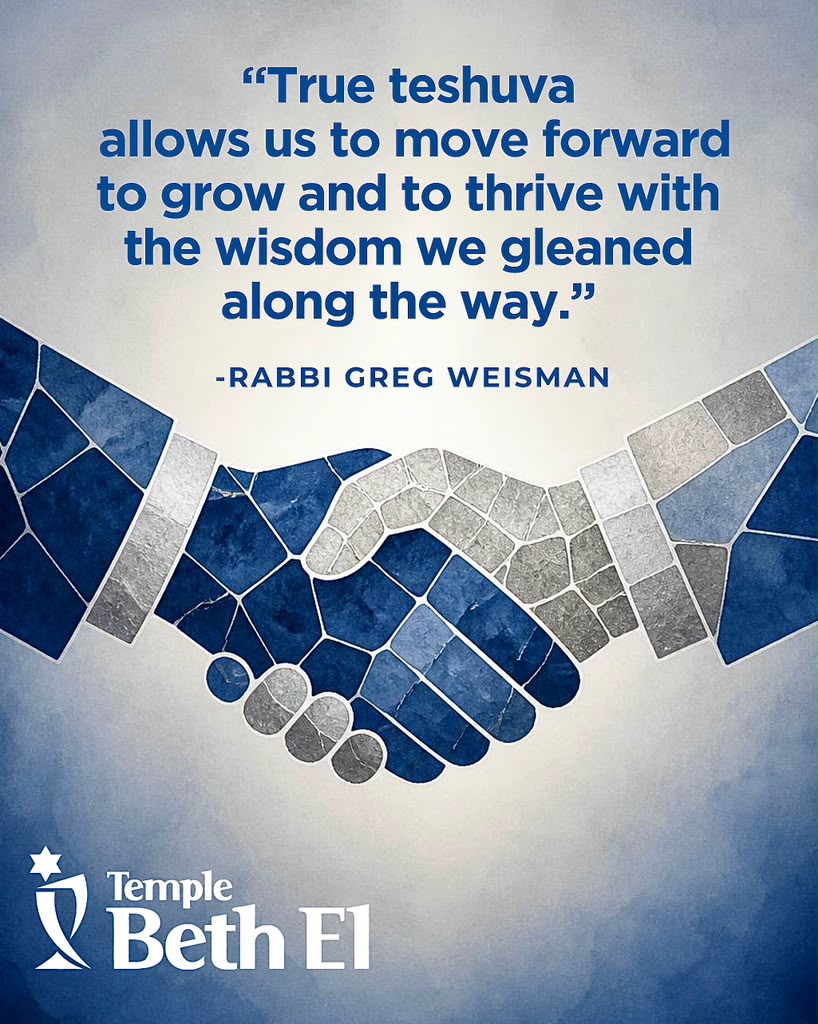
On this Shabbat Shuva, as we journey through these ten days of repentance, let us not let our past transgressions define who we are. True teshuva allows us to move forward to grow and to thrive with the wisdom we gleaned along the way. Let us challenge ourselves to grow and improve, shedding our past mistakes and embracing our future successes. Teshuva is the path to a better version of ourselves.
Shabbat Shalom,

Rabbi Greg Weisman