Construction has started.
Despite years and years of protest, the City of Jerusalem has begun construction of the “Light Rail” line down Emek Refaim Street.
Over the past few decades, Jerusalem has grown and expanded into the largest municipality in Israel, and with it the need for transportation infrastructure. Those that laid Jerusalem’s avenues and side-streets never imagined a city of nearly one million people, with all the traffic and congestion that comes along with it.
Construction walls show renderings of the planned shopping areas and parks that will surround the new station – with a sign that captures their intent: “היסטוריה פוגשת עתיד – Historiah Pogeshet Atid – History Meets the Future.”
In so many ways, this is more than the mission of the Light Rail, but of the State of Israel and the Jewish people itself.
Three thousand years ago King David first walked the streets of Jerusalem newly conquered from the Jebusites. Today Jerusalem is a municipality of nearly one million people. For three millennia, Jerusalem remains the heart of the Jewish people, the place toward which every Jew turns in prayer, the place toward which we send our hopes and prayers, the place from which we draw our hopes and dreams. Ancient alleyways and newly-built neighborhoods reverberate with ancient words and modern melodies, ancient ideas with modern principles, ancient traditions practiced by modern people.
This process of creating synapses between the rich history of our people’s traditions and the future we seek to create is the ever-evolving story of our experience.
Judaism is at once about delving deep into our past and cultivating an imagination for the future. It is about reaching into the storehouse of thousands of years of accrued wisdom to answer the questions that perplex us most today.
In this week’s portion, Moses encounters a challenge. A man from the Menashe tribe named Tzelofchad had five daughters but no sons. When he died, they feared they would lose their family’s estate and their rightful inheritance. So, they went to Moses and argued their case – that they as women should be entitled to inherit their family’s land.
Moses brings the case before the Holy One, and God agrees with their claim, that their right to inherit as women should be secured.
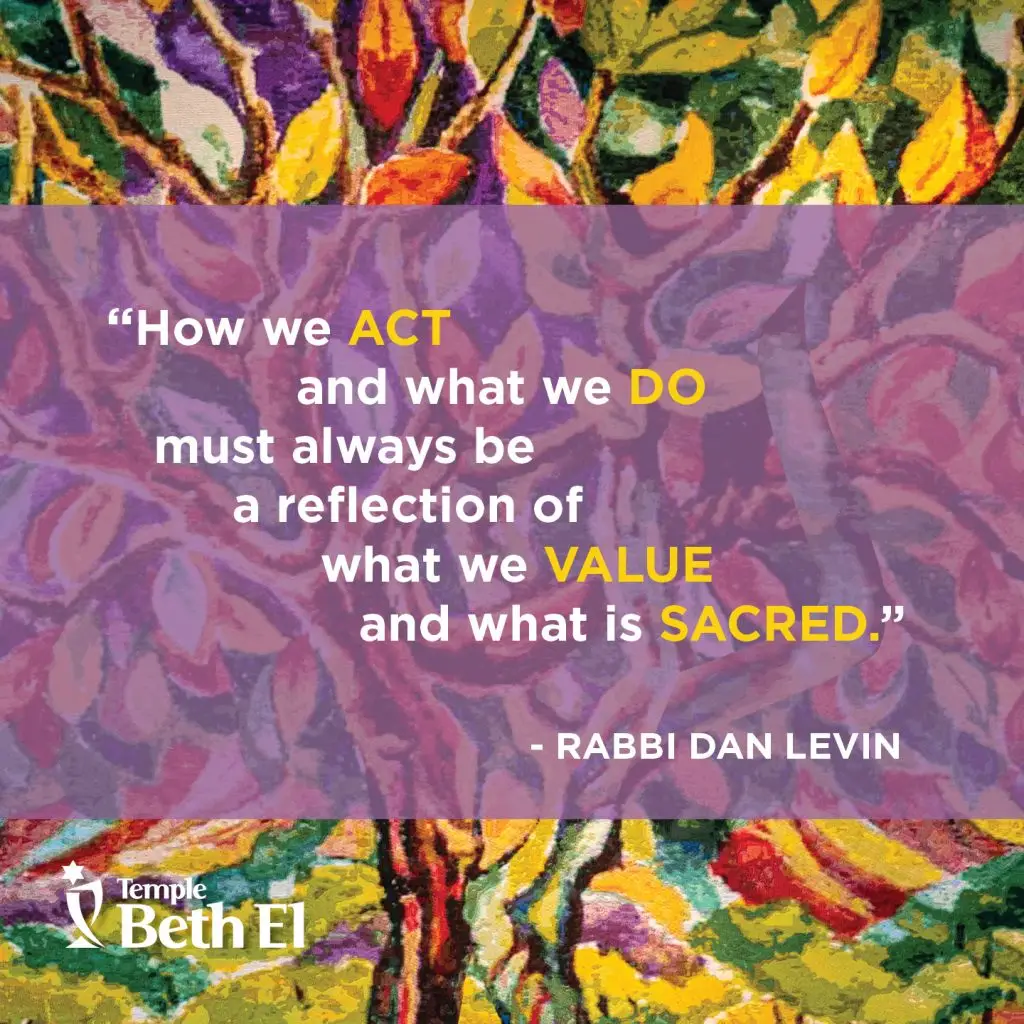
In this case, the Holy One understands that the law must adapt and meet the circumstances in which real people live. How we act and what we do must always be a reflection of what we value and what is sacred.
Spending this week studying in Jerusalem was a rich opportunity to engage this exercise. Arriving on the heels of yet another missile attack from Yemen, with Israelis exhausted from 650 days of war and the ongoing conflicts that embroil Israeli society, praying constantly for the return of the hostages, the Jewish people learn how to grapple with the complexity of what everyone calls המצב – HaMatzav – “the situation.”
How does tradition help us understand how to draw the boundaries around what is acceptable and what is not?
What does tradition teach us about how we prioritize the achievement of just and righteous aims with the requirement to employ just and righteous means?
How are we supposed to respond when confronted and attacked as individuals for who we are and what we believe?
How do we know when we must defend ourselves with force, and when do we use diplomacy to build alliances?
These are not questions unique to this moment. They are the timeless questions our sages struggled to answer and with which we still contend today.
Judaism evolves through the sacred exploration of the wisdom amassed over centuries to inspire a creative synthesis of new understanding in order to meet the moment.
So often it is crisis and anguish that spurs us to imagination and creativity. But when we build something new, it will only be strong and lasting when its foundation is grounded and secure in deep bedrock.
Israeli author David Grossman wrote: “In paralyzing times like these, the imagination is like an anchor that we cast from the depths of despair into the future, which we then start to pull ourselves toward.”
May our rich history and our extraordinary tradition guide us through the agonies and complexities of this moment, and inspire us to cast our imaginations into a future that will lead us to understanding, righteousness, humanity, and peace.
Shabbat Shalom,

Rabbi Dan Levin
Temple Beth El of Boca Raton