We are a people of emotional movement.
There is a beautiful ritual in our tradition to mark the end of shiva, the seven days of mourning after a loved one passes. This powerful practice helps ease the shift from the most intense period of grief back into the rhythms of daily life. On the morning of the last day, the mourner doesn’t do this alone—they’re joined by friends or loved ones. Together, they rise from the low seat that symbolizes the weight of mourning, and they take a walk—sometimes just around the block.
It’s simple, but meaningful: standing up, physically moving forward. In some communities, the friends say the traditional words of comfort—“May God comfort you among all the mourners of Zion and Jerusalem”—and then gently say, “Arise.” It’s a way of saying: you’re not expected to be done grieving, but you don’t have to stay in the same place. We’re with you as you take the next step.
This physical action is meant to symbolize movement in the healing journey. Because as Jews, we are commanded to live. As it says in Deuteronomy 30:19: “Choose life, so that you and your descendants may live.” It’s embedded in our culture—every time we raise a glass, we say L’Chaim—to life.
Judaism teaches us to choose life, but also recognizes that choosing life isn’t always easy. It honors the ups and downs of our journeys and gives us rituals to respond to each moment—whether we’re grieving, rejoicing, questioning, or searching.
This Saturday evening marks the beginning of Tisha B’Av, the 9th day of the Hebrew month of Av. It is the saddest day on the Jewish calendar—a day dedicated to mourning some of the most devastating losses in Jewish history: the destruction of the First and Second Temples in Jerusalem, as well as expulsions, massacres, and other tragedies across time.
But Tisha B’Av is more than a history lesson. It’s a day to feel our brokenness—personally and collectively. We fast. We sit low to the ground. We read Eicha (Lamentations), full of raw grief and longing. It’s a day to ask big questions about suffering, exile, and resilience—and to make space for pain without rushing to fix it.
And yet, built into the rhythm of Jewish life, even this day of mourning is surrounded by hope. Just a week later comes Shabbat Nachamu—the Shabbat of Comfort—reminding us that healing begins even in the shadow of loss.
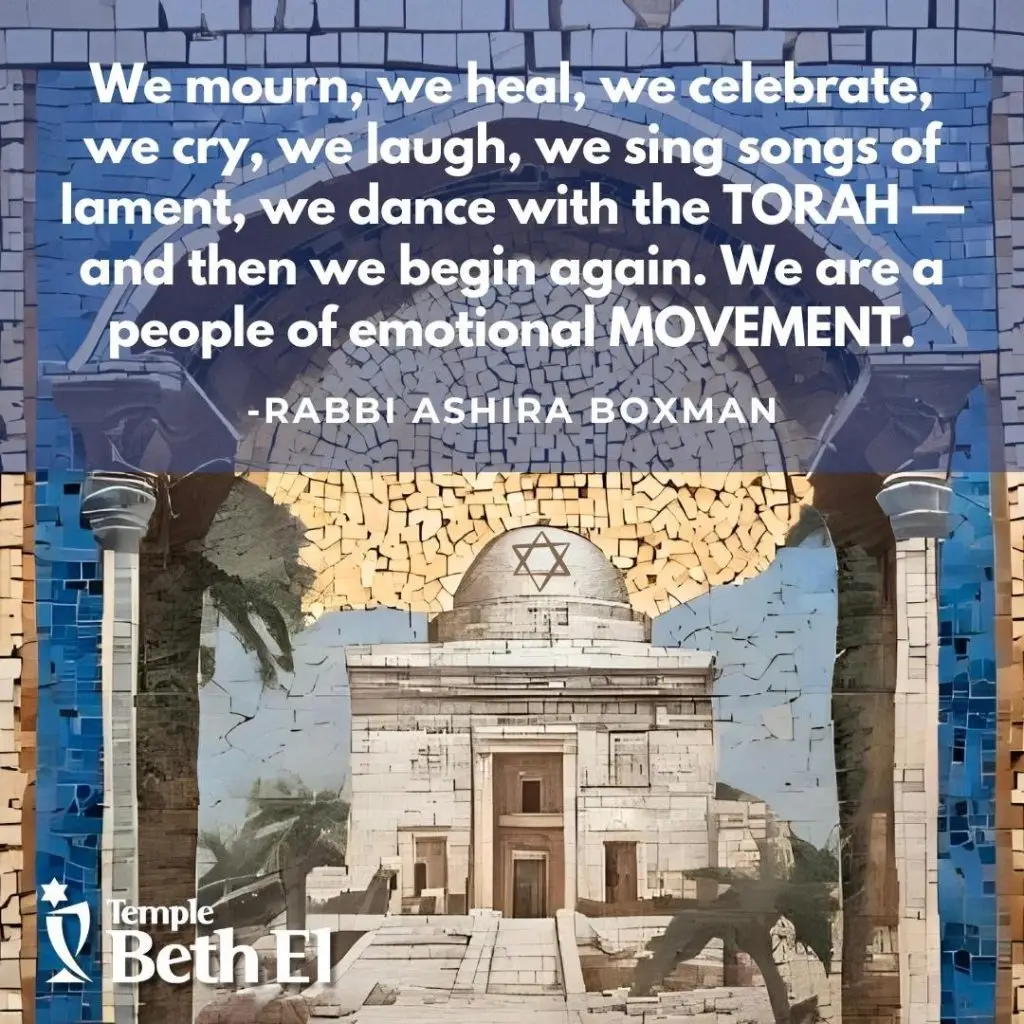
This constant dance is part of who we are as Jews. We mourn, we heal, we celebrate, we cry, we laugh, we sing songs of lament, we dance with the Torah—and then we begin again. We are a people of emotional movement.
This week’s Torah portion, Devarim, offers a beautiful image of movement, commanded by God: “Our God Adonai spoke to us at Horeb, saying: You have stayed long enough at this mountain. Turn and make your way to the hill country…” (Deuteronomy 1:7–8).
The midrash in Sifrei Devarim (5:3–4) adds: “Dwelling at this mountain is bad for you. Turn, pick yourselves up and come—idleness is bad.” Even our own tradition warns against staying stuck for too long. We’re called to move forward—not by ignoring our feelings, but by bringing them with us.
On this Shabbat, may we all find the strength and courage to keep moving through the waves of life. May we lean on those around us for support, may we uncover holiness to light our path forward, and may we continue to sway like the trees—with grace, resilience, and openness to the ever-changing winds.
Shabbat Shalom,

Rabbi Ashira Boxman