
Click here to listen to an audio recording of this Shabbat Message by Rabbi Dan Levin.
I grew up in a committed Reform Jewish home – active in our synagogue, but not accustomed to traditional elements of Jewish practice. But, in my junior year at Hebrew University of Jerusalem, I fell passionately in love with Torah study. I spent a few days each week studying with Rabbi Josh Boretzky, a loving and patient mentor and teacher.
One night, as we learned together, we went off on a tangent. “You just have to get,” he said, “that the Torah comes word-for-word, letter-by-letter, from God. You just have to get that. Everything hinges on that.”
And I remember saying to him, “I believe the Torah comes from God, but I believe it passes through a very human filter. And we have to figure out which parts of Torah are human, and which parts are Divine.”
And that’s the moment I knew: I’m not Orthodox. I’m Reform.
What does it mean to be Reform? What is really at the heart of Reform Judaism?
To me, it comes down to this. It’s where you hear God’s voice command you most authentically.
Sometimes we look for God’s commanding voice outside of us. It comes from authority figures, like parents and rabbis and teachers, who tell us: “This is what you’re supposed to do. This is your obligation. This is right, and this is wrong.” And because we trust them, we follow their instruction and do what we’re told.
But we also believe that implanted in each of us is a kernel of God’s light and energy that makes us, us. We call that our spirit, or our soul. And it is from that place we also hear God call to us as well.
In this week’s Torah portion, Parashat Naso, we learn about the vows of a Nazirite. A Nazir was a man or woman who chose to devote a period of time to deep spiritual practice and devotion. A Nazir was required to abstain from wine, or any alcohol. A Nazir could not cut their hair or trim their beards. Lastly, a Nazir was forbidden from coming near a dead body, even in the case of a family-member.
A person might choose to become a Nazir because they wanted to work on their character or reconnect to their spirituality. A famous story in the Talmud relates how a particularly handsome young man with beautiful curly hair chose to become a Nazir. Rabbi Shimon HaTzadik asked him why he became a Nazir, since that would mean shaving all his beautiful hair. He replied that he had become vain and wanted to cultivate a stronger sense of humility before God.
No one told him to become a Nazir. But God told him – God spoke to him from his heart, and he listened to that commanding voice.
And for me, it is from within that we hear God speak to us most authentically. We experience a calling, or epiphany, a moment of clarity when we understand precisely what God needs us to be or do.
But just as God speaks to us through the very human filter of Torah, so God also speaks to us through the very human filter of the human heart.
God’s voice can be warped and distorted by ego or by trauma. It can be drowned out by the cacophony of other voices in our head – the cries of greed, of jealousy, of lust; the screams of anger and resentment; of hunger for love or thirst for belonging, the wails of grief and loneliness.
Our mission is to lean into the yearnings of a Nazir, to shed our distractions and to focus on how God calls us to holiness.
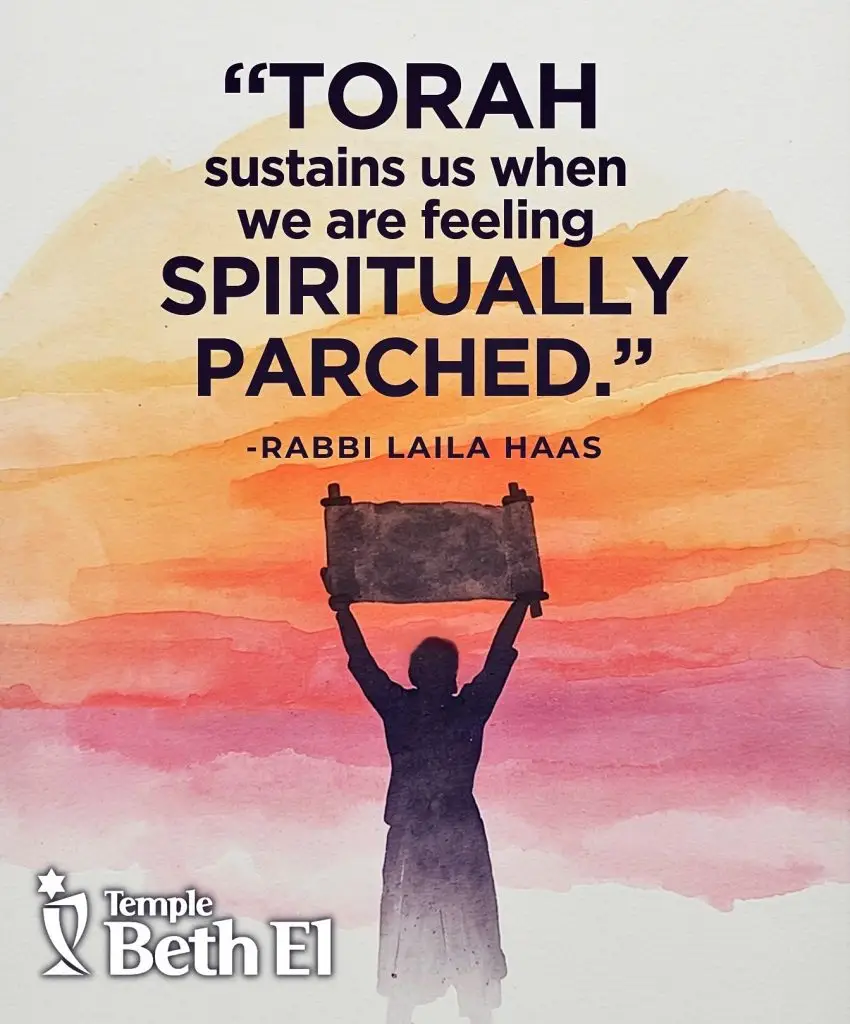
We listen for God’s call in dialogue with the sacred texts of our tradition.
We listen for God’s call in the midst of ritual and sacred practice.
We listen for God’s call in acts of service and compassion and justice.
We listen for God’s call in the quiet moments of conscience, and in the nexus of love.
It’s not easy to discern what it is that God is asking of us. Listening to God takes practice. It takes deliberate intention.
So open your ears to wise teachers and read great words. Open your mind to new ideas that challenge you to think. Open your heart to what love can show you.
Then we may better hear God’s authentic call from within. And if we hear, then we can vow to respond.
Shabbat Shalom,
Rabbi Dan Levin
Temple Beth El of Boca Raton