Last week, I had the privilege of attending my first World Zionist Congress as a delegate representing ARZENU—the political voice of Reform, Progressive, and Liberal Religious Zionists within the World Zionist Organization.
Of all my trips to Israel, this one felt different. To be surrounded by hundreds of Jews from every walk of life, every stream of Judaism, and almost every corner of the globe; all gathered around a shared value of Zionism, was both powerful and deeply moving.
For those unfamiliar, the World Zionist Congress was founded by Theodor Herzl in 1897 in Basel, Switzerland, as a way to include all Jewish voices, both in Israel and the Diaspora, in shaping Israel’s future. While only Israeli citizens vote in Knesset elections, Jews around the world can vote in elections for the World Zionist Congress, which determines how power and funding are distributed among the major Zionist organizations for the next five years.
About a year ago, you might remember being asked to “Vote Reform.” Well, your vote truly mattered. Because of your participation, ARZENU had the largest delegation at the Congress. This incredible representation allowed us to help pass meaningful resolutions that reflect our deepest values. Together with our partners from other like-minded movements, we advanced resolutions calling for government transparency, an immediate investigation into the October 7th attacks, the reopening of the egalitarian plaza at the Kotel, and greater protection for liberal Jewish institutions across Israel.
Each delegate was assigned to a specific working group. I served in the “Resilience and Healing” committee, which focused on Israel’s growing mental health crisis in the aftermath of October 7th. We proposed and passed resolutions urging national leaders to prioritize mental health services, as rates of PTSD among Israeli adults have surged from 4.5% pre-war to 23% today. The IDF has also seen a tragic rise in suicides, with 54 soldiers lost since last October and thousands more diagnosed with combat-related trauma. I left feeling hopeful that these resolutions will move from words on paper to real, life-changing action.
Of course, gathering such a wide spectrum of Jewish voices under one roof came with its challenges. The debates were often intense, the disagreements sharp. At times, the divisions within our people felt painful to witness. And yet, as someone deeply committed to Jewish peoplehood, I was struck by the shared passion that pulsed beneath it all, the love of Israel, the yearning to build a Jewish state that reflects our values, our hopes, our ideals.
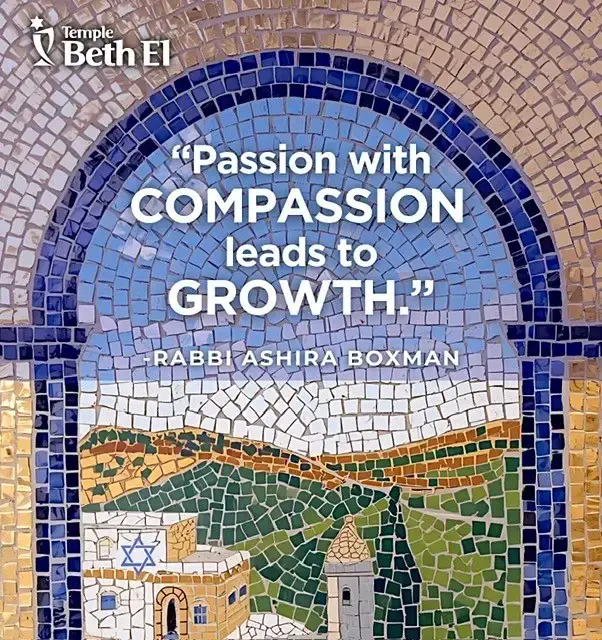
I left with a renewed conviction. Our passion must never wane, but it must always be accompanied by empathy. Passion without listening leads to fracture; passion with compassion leads to growth.
As we enter Shabbat, may we be reminded of the power of our collective voice, our obligation to hold both passion and empathy, and our sacred commitment to the land, the people, and the State of Israel.
Shabbat Shalom,
Rabbi Ashira Boxman