In teaching about the Torah to religious school students, I often ask the same questions to begin relating the Torah to their lives: “What is your favorite book? Why is it your favorite book? How many times have you reread the same book?” Most students say they’ve read their favorite book two or three times. Maybe, on a unique occasion, one student will say six times. It is after this response that they are shocked when I deliver the news that the Jewish people have read and continue to read the same book for thousands of years. No new stories, no new characters, just the same stories over and over again. And not only do we return to it year after year, but we dedicate an entire holiday to celebrating when it was given to us.
This holy celebration, this holiday, called Shavuot, began last night at sundown. Shavuot celebrates the receiving of the Torah from God at Mount Sinai, and as a people we spiritually renew our acceptance of God’s gift.
Many people might know this holiday as “the cheesecake holiday” or “the one where we eat blintzes.” It has become customary to eat dairy on Shavuot, and the rabbis offer many reasons as to why.
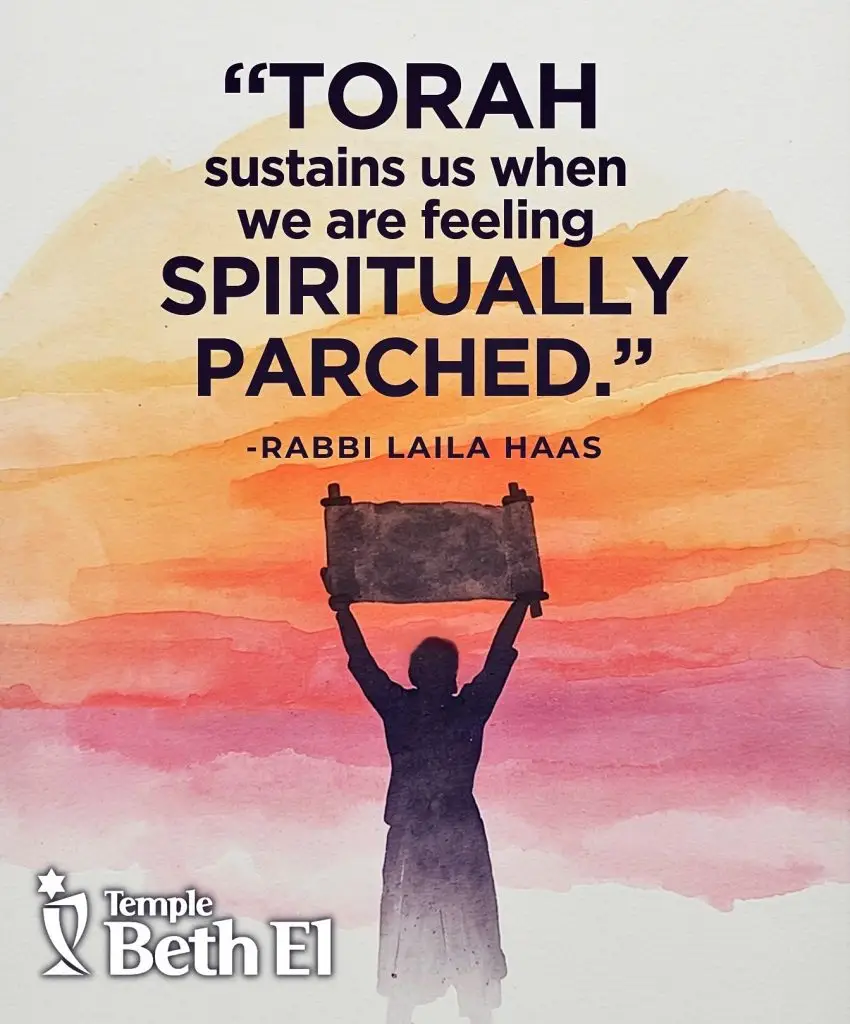
One popular explanation is that the Israelites were promised a land “flowing with milk and honey,” as written in Exodus 3:8. This combination of foods is referenced several other times throughout the Torah, likening Torah study itself to nourishment, sweetness, and sustenance.
Another explanation for eating dairy on Shavuot derives from the story of when Moses received the Torah. The Jewish people had suddenly been presented with an entirely new set of laws and ways of living. Many of the foods and utensils they had previously used no longer aligned with these new kosher practices, including the meat they had been eating. So, in that moment of transition, they turned to dairy, something simpler, something that did not require the same preparation or ritual process.
Personally, I appreciate this second explanation because it speaks to the deeper meaning of what we really celebrate on Shavuot. We celebrate the gift of structure, the gift of a values system, the gift of spirituality, and the gift of our beautiful, complex, multifaceted, thought-provoking, nurturing, and holy religion that is Judaism.
In receiving the Torah, we were given the culmination of our peoplehood, one shared story that generations of Jews would return to again and again. In receiving the Torah, we were given the history of our ancestors, those giant shoulders upon which we stand. In receiving the Torah, we were given laws, rituals, and rhythms to help guide our lives, nurture our souls, and push us toward becoming the best versions of ourselves while building a world that can reach its highest potential.
And maybe that is why we continue to read the same stories year after year. Not because the stories change, but because we do.
Each time we return to Torah, we bring a different version of ourselves to the text. Different joys, different heartbreaks, different questions, different wisdom. The stories remain the same, but somehow they continue to meet us exactly where we are.
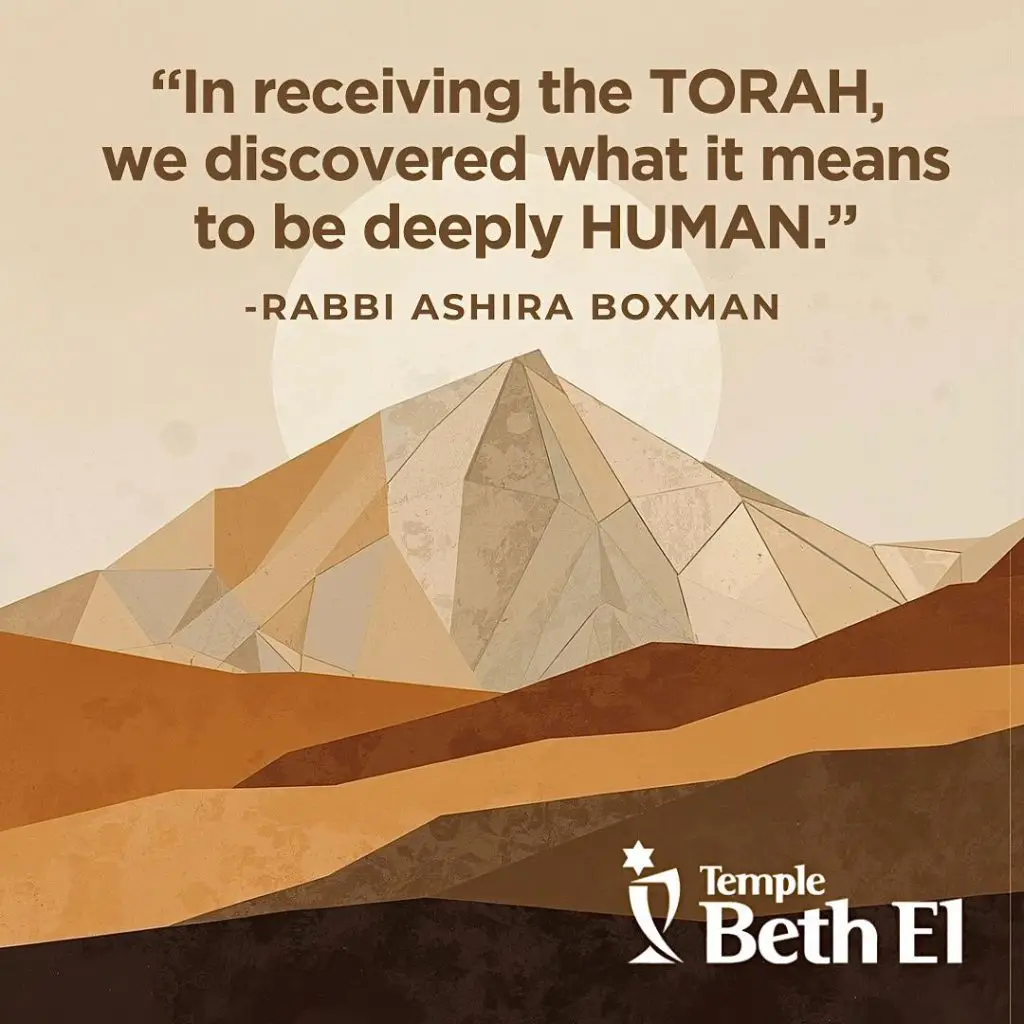
In receiving the Torah, we discovered what it means to be deeply human. In reading these ancient stories year after year, we are reminded that our struggles are not unique. The fears, hopes, disappointments, celebrations, and moments of uncertainty that filled the lives of our ancestors continue to fill our own lives today. Torah reminds us that we are part of a much larger story, one that stretches backward for generations and forward into the future.
And perhaps that is the true gift of Shavuot: not simply that Torah was given once at Sinai, but that every year we have the opportunity to receive it again. To return once more to the stories, the values, and the wisdom that continue to shape who we are and who we hope to become.
Chag Sameach & Shabbat Shalom,
Rabbi Ashira Boxman