Like so many others, during those first dark months of COVID-19, I completely lost track of time. I would forget what day of the week it was. Each day blurred into the next. Staying home, changing from my nighttime pajamas into my daytime pajamas, doing schoolwork on the computer (I was in rabbinical school at the time), and binge-watching a really great Israeli TV show called Beauty and the Baker (which I highly recommend.)
Feeling disoriented and out of routine, I realized I needed a way to count my days. I needed a way to renew myself each week. Beyond the obvious gift of Shabbat as a marker of time, I decided to begin baking challah every Friday. COVID-19 marked the beginning of my challah-baking career.
As I baked week after week, I noticed how relieved and at ease I felt. I had something to look forward to. I had intentionally set aside time to reflect and turn inward. But most of all, I had a reset, a moment of renewal as I prepared for the week ahead.
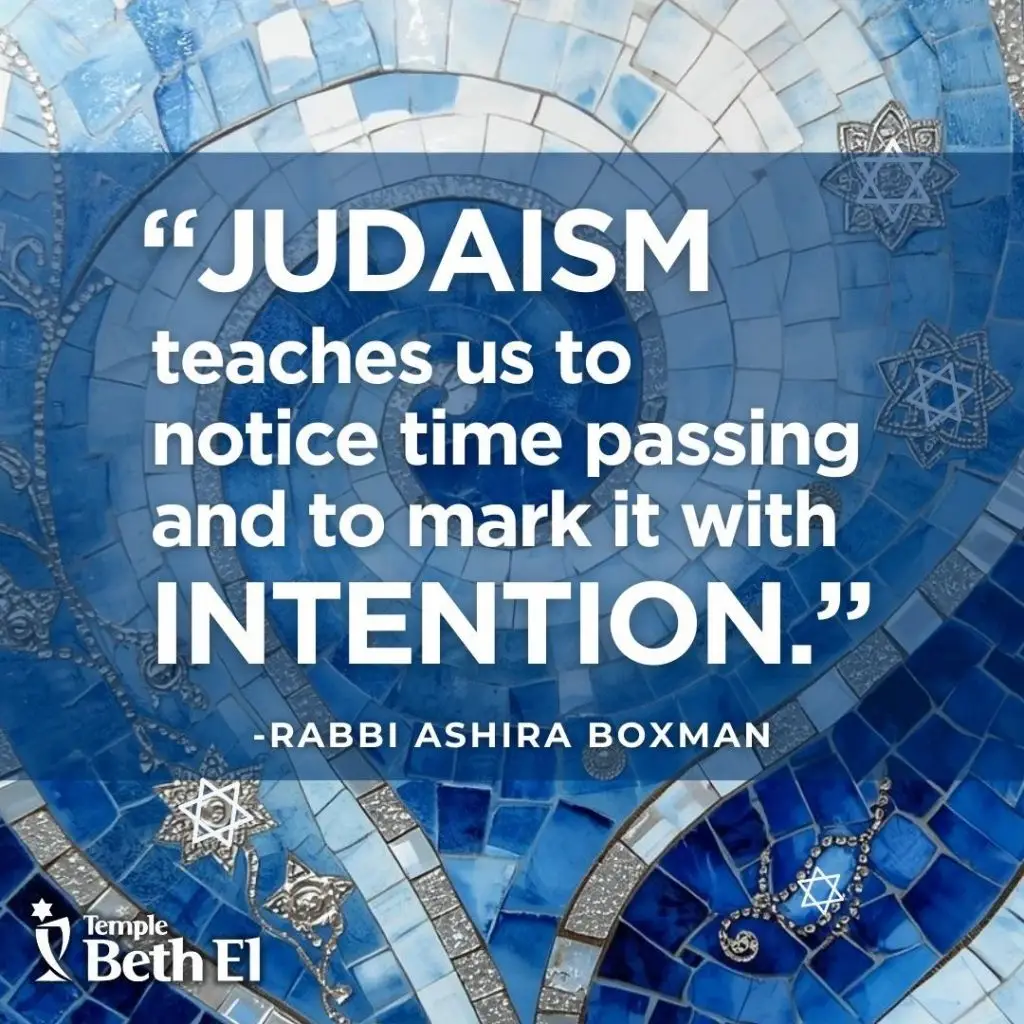
Judaism offers us countless rituals to mark time: weekly, monthly, and yearly.From Shabbat to Havdalah, from Rosh Chodesh to Rosh Hashanah, Judaism teaches us to notice time passing and to mark it with intention.
And this is no coincidence.
In this week’s Torah portion, Parshat Bo, we are given our very first commandment as a people. “This month shall mark for you the beginning of the months; it shall be the first of the months of the year for you” (Exodus 12:2). Our first commandment is not about belief or ritual practice, it is about time. God instructs the Israelites to establish a calendar.
I imagine I’m not alone in wondering: Why is this our very first commandment? Surely there are so many other teachings that seem more urgent or foundational.
Seeking meaning, I turned to our rabbinic commentators. Sforno, a 16th-century Italian rabbi, offers a powerful insight. He explains that this commandment stands in direct contrast to the years of enslavement in Egypt, when the Israelites had no control over their time at all. Their days, hours, and even minutes belonged to their taskmasters. Freedom, Sforno teaches, begins with the ability to determine one’s own time.
The context of this commandment matters. The Israelites receive it while they are still in Egypt—just before they leave slavery and step into freedom. Sforno reminds us that freedom and control over time go hand in hand.
This is a lesson and a reminder for us today.
Our lives can often feel dictated by others: by work responsibilities, family needs, and the endless to-do lists of daily life. And yet, when we step back and look at our lives more holistically, we are still their authors. Unlike the Israelites in Egypt, we are not enslaved. We have the ability and the responsibility to choose how we spend our time.
Not only do we have that choice, but our tradition commands us to recognize the power of marking time.
As we welcome Shabbat, I invite you to do just that. Pause. Reflect on the week that has passed. Be grateful for this present moment. And look ahead to the week to come. Consider how you allocate your time in your own life. Are there ways you might reorganize your calendar to better honor the freedom you inherently possess?
Shabbat Shalom!
Rabbi Ashira Boxman
Rabbi Ashira Boxman