Last summer, a couple dozen volunteers gathered at the Temple, filling hundreds of backpacks for students in our community. One of the volunteers, Naomie, joined us from one of the local agencies that would receive and distribute the backpacks. She had reached out to the leaders of The Giving Tree, which has organized this supply drive for years, to ask if she could be part of this effort. It was incredibly inspiring to see someone who has herself been a beneficiary of the generosity and support The Giving Tree offers show up and seek to pay it forward with such generosity of spirit.
It was that same generosity of spirit that called Myra Singer, z”l, to start The Giving Tree in her garage nearly 40 years ago. She saw an opportunity to help a few local children in Boca Raton experience holidays their parents could not afford to provide gifts for. A small group of volunteers and generous donors bought, wrapped, and delivered those gifts, starting something that has grown steadily over the decades. Last winter, nearly 2,000 children and adults received holiday gifts from The Giving Tree, hand-wrapped by Temple volunteers. More than 700 children received back-to-school backpacks. On a weekly basis, our local partner agencies come to The Giving Tree with requests for everything from clothing and school uniforms to home goods, toiletries, books, and school supplies. Our Clothing Closet and Quiet Giving volunteers shop for and deliver these items with the same care and concern as if they were shopping for their own children.
The Giving Tree represents generosity, compassion, and communal care in everything it does. And, as we learn from this week’s Torah portion, what The Giving Tree does are acts of holiness.
This week we arrive at the very middle of the Torah, Parashat Kedoshim. “You shall be holy,” God tells us, “for I, the Eternal your God, am holy.” What follows is an illustration of the actions and behaviors that bring us toward holiness: seeking a spiritual connection to God, avoiding transgressions such as stealing, lying, or cheating, and sharing some of what we have with those who are less fortunate. “Love your neighbor as yourself,” the instruction concludes, guiding us to center concern for others in our minds, hearts, and souls.
A century ago, Rabbi Shimon Shkop offered this beautiful reflection on the pursuit of holiness to which our Torah portion calls us:
“All of our work and effort should constantly be sanctified to doing good for the community. We should not use any act, movement, or get benefit or enjoyment that doesn’t have in it some element of helping another. And as understood, all holiness is being set apart for an honorable purpose – which is that a person straightens their path and strives to constantly make their lifestyle dedicated to their community. Then, anything one does even for oneself, for the health of one’s body and soul, one also associates with the mitzvah of being holy; for through this one can also do good for the masses.”
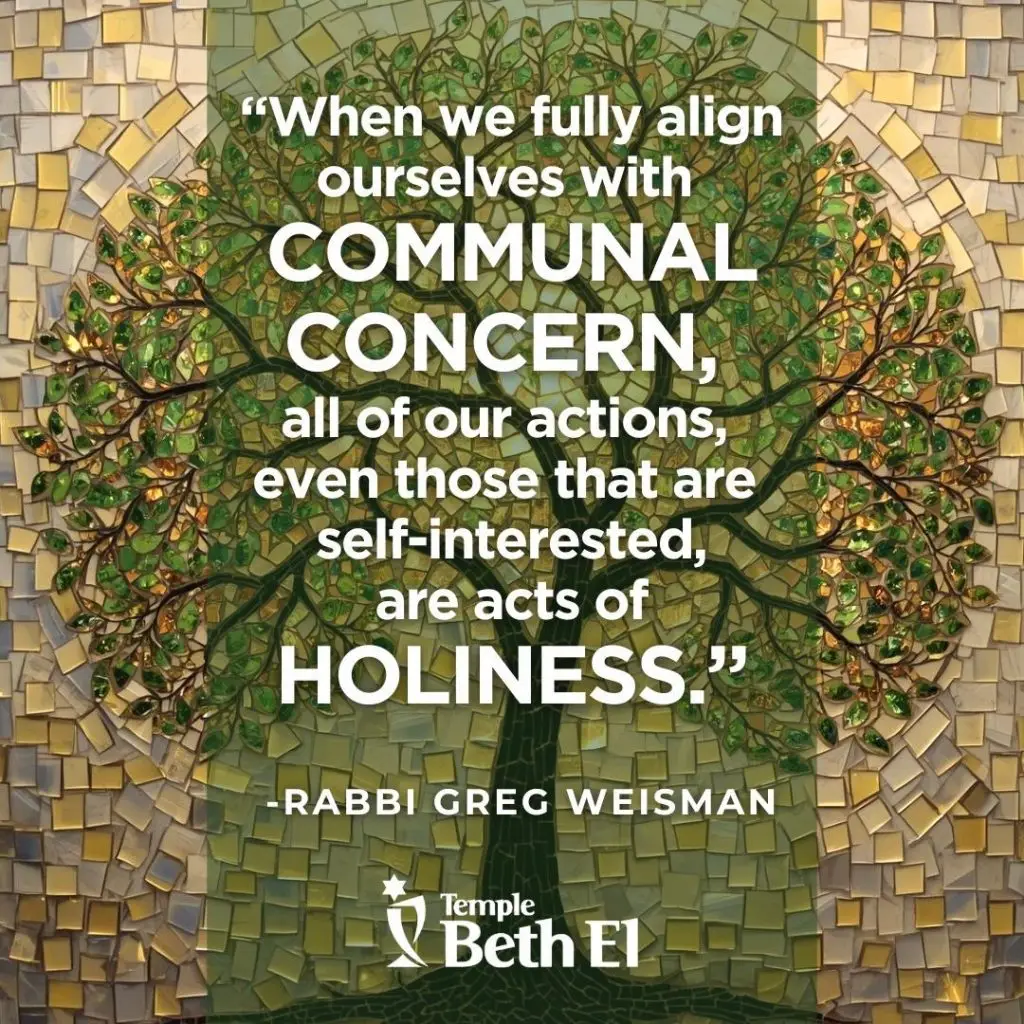
The work of The Giving Tree exists for a single purpose: to help those around us. That work is painstaking, time-consuming, emotionally demanding, and holy. Beyond the incredible impact The Giving Tree has on those it serves, it also transforms those who do the serving. As Rabbi Shkop suggests, by acting in service of others we straighten our path and come to live in such a way that each of our actions becomes a mitzvah and an act of holiness. When we fully align ourselves with communal concern, all of our actions, even those that are self-interested, are acts of holiness.
That reflexive nature of service, the idea that the good we do lifts us up as well, is borne out in the end of Naomie’s story. While she was with us last summer, she shared that she was eligible to apply for U.S. citizenship, but that the process felt both daunting and expensive. She didn’t know where to begin. At that moment, members of our synagogue community saw an opportunity to support her on that journey. We connected her with the Florida Immigrant Coalition, a local organization that helps people navigate challenges like completing applications, gathering documents, and securing funds for associated fees. After a flurry of emails and a few phone calls, Naomie’s application was filed last August. Two weeks ago, she had her interview with Citizenship and Immigration Services. Today, God willing, she will be sworn in as a U.S. citizen. It was through her act of generosity, by volunteering with The Giving Tree, that this blessing in her life materialized.
Today, as the newest member of our American society, may the words of our Torah inspire us to send her our love. And may her commitment to both receiving and giving love,,and her example of living in the pursuit of holiness, inspire us to seek holiness in our own lives as well.
Shabbat Shalom,
Rabbi Greg Weisman

[1] Ketubot 67b
[2] Kedushat Levi, Exodus, Yitro 4
[3] https://news.stanford.edu/stories/2022/09/asking-help-hard-people-want-help-realize